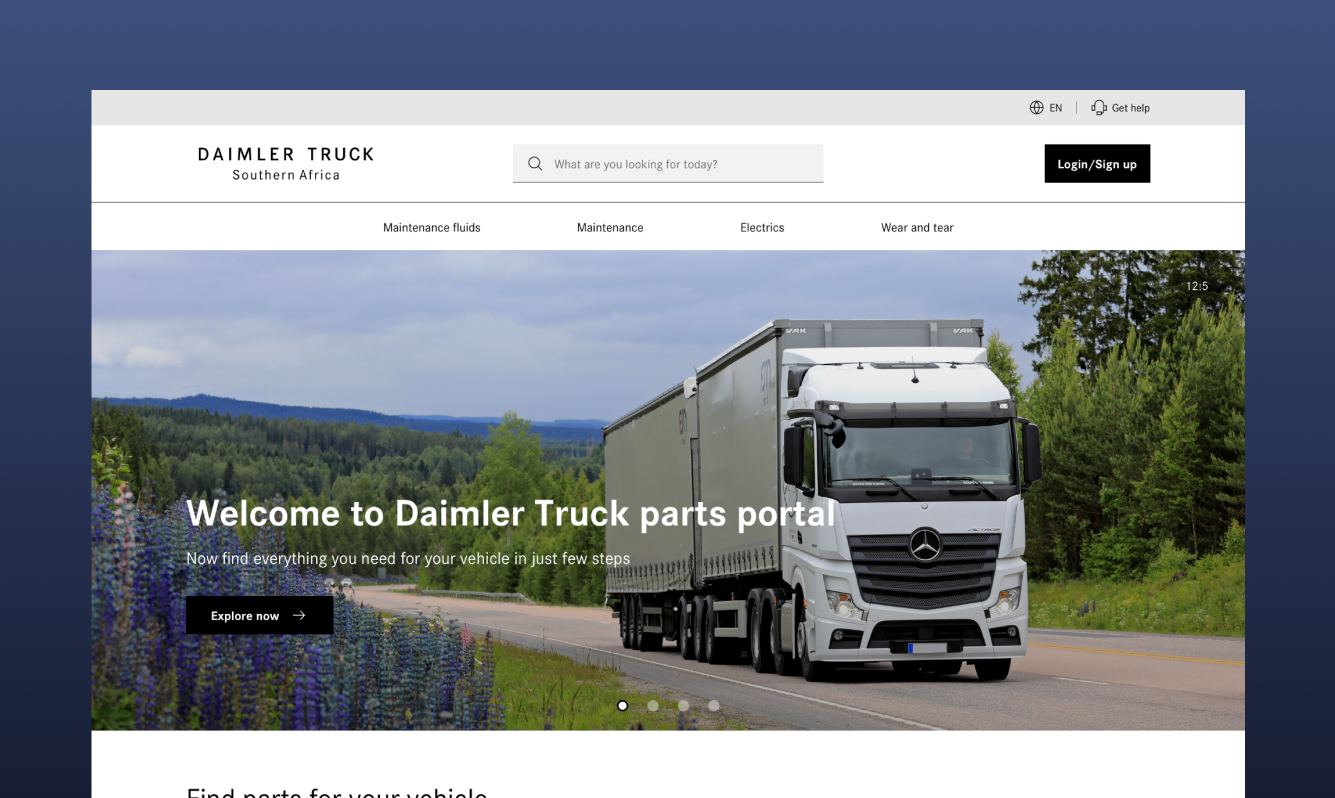
Daimler Trucks Parts Portal
An e-commerce platform for dealers and fleet customers to source genuine parts, built for two regions and shaped by global brand standards.
Project overview
Daimler Truck Overseas needed a dedicated e-commerce platform for selling genuine truck parts through their dealer network. Without it, dealers were managing parts requests through fragmented channels: phone, email, dealer management systems, and manual order export. Fleet customers had no straightforward way to buy parts upfront.
The brief was to build a unified parts e-commerce experience that would serve dealers as the primary channel, support fleet and cash customers, integrate with regional dealer management systems, and reflect Daimler's global brand. Phase one would launch in South Africa. Phase two would extend to Australia, where the operational and inventory model differed enough to require careful localisation.
I led design across both regions, partnering with product, engineering, and the regional business teams from discovery through to dev handoff.
The problem
Three constraints shaped how the work needed to be approached.
First, this was a B2B journey, not a B2C one. The buyer was usually a dealer or a fleet operator, not a casual consumer. The product catalogue ran into thousands of SKUs across truck models, and a buyer would often know exactly which part they needed (by VIN, by model, by part number). The design had to respect that expertise without making the experience feel like a database.
Second, Daimler's global brand guidelines were comprehensive and built for marketing surfaces, not transactional ones. Applying them at face value would have produced a heavy, slow-feeling interface that worked against the speed dealers needed. The guidelines needed to be honoured but interpreted, distilled into a tighter, more functional system that still felt unmistakably Daimler.
Third, two regions meant two operational realities. South Africa launched first with a single dealer management system and cash-first customers. Australia added a non-integrated dealer model, a different payment provider, and Autoline-based inventory updates. The design had to work for both without two divergent codebases.
Benchmarking
With the buyer profile and brand framing clear, I looked outward to see how the strongest global players in the truck parts space were positioning themselves and structuring their journeys.
Three benchmarks anchored the work:
- Volvo Trucks Genuine Parts - The gold standard for hierarchy and product clarity. Their use of model-first navigation, clean part presentation, and integrated dealer locator gave us a strong reference for how a premium parts brand presents itself online.
- Isuzu Trucks Parts - A useful contrast point for how a more utilitarian operator structures the same information. Stronger on functional density, weaker on brand presence.
- MAN Trucks - A European reference for how an OEM balances dealer-facing tools with customer-facing storefronts in a unified system.
The takeaways shaped the direction:
Lead with the truck model, not the part. Dealers and fleet customers think in vehicles first, parts second.
Surface the dealer relationship clearly. Trust and proximity matter in this category, more than search and filter.
Keep brand presence consistent but functional. Premium without being slow. Confident without being decorative.
The work
The project came together across four core areas of design work.
A focused, brand-true design system
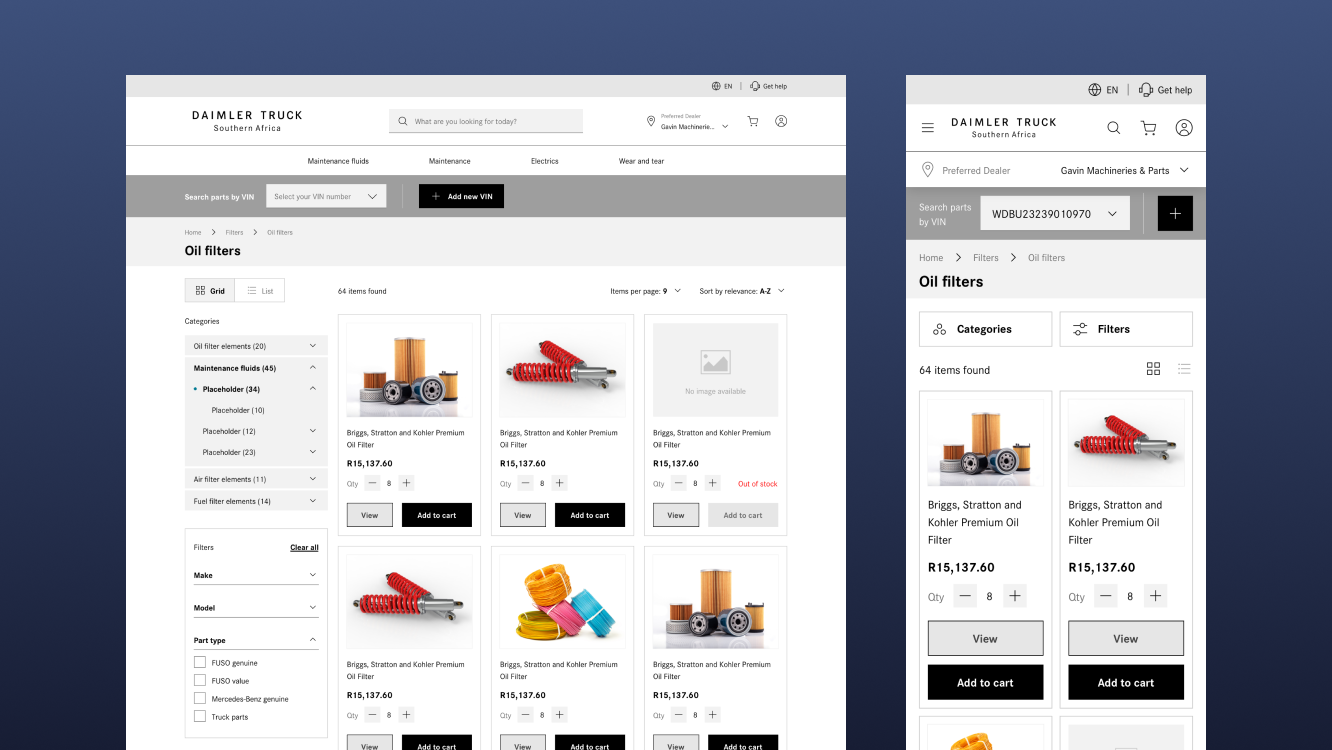
Daimler's global brand book is built for high-impact marketing surfaces, not the day-to-day rhythm of a transactional product. Working from those guidelines, I distilled a smaller, sharper system: a tighter type scale, a functional grey palette anchored by Daimler's primary brand colours, and component patterns that worked at e-commerce density.
What got cut was as important as what stayed. Decorative dividers, oversized headers, and marketing-grade hero treatments were pulled out in favour of patterns that supported scanning long product lists, comparing SKUs, and moving quickly from search to cart. The system stayed unmistakably Daimler in feel, but built to work at the pace dealers operate at.
A customer journey that respected B2B reality
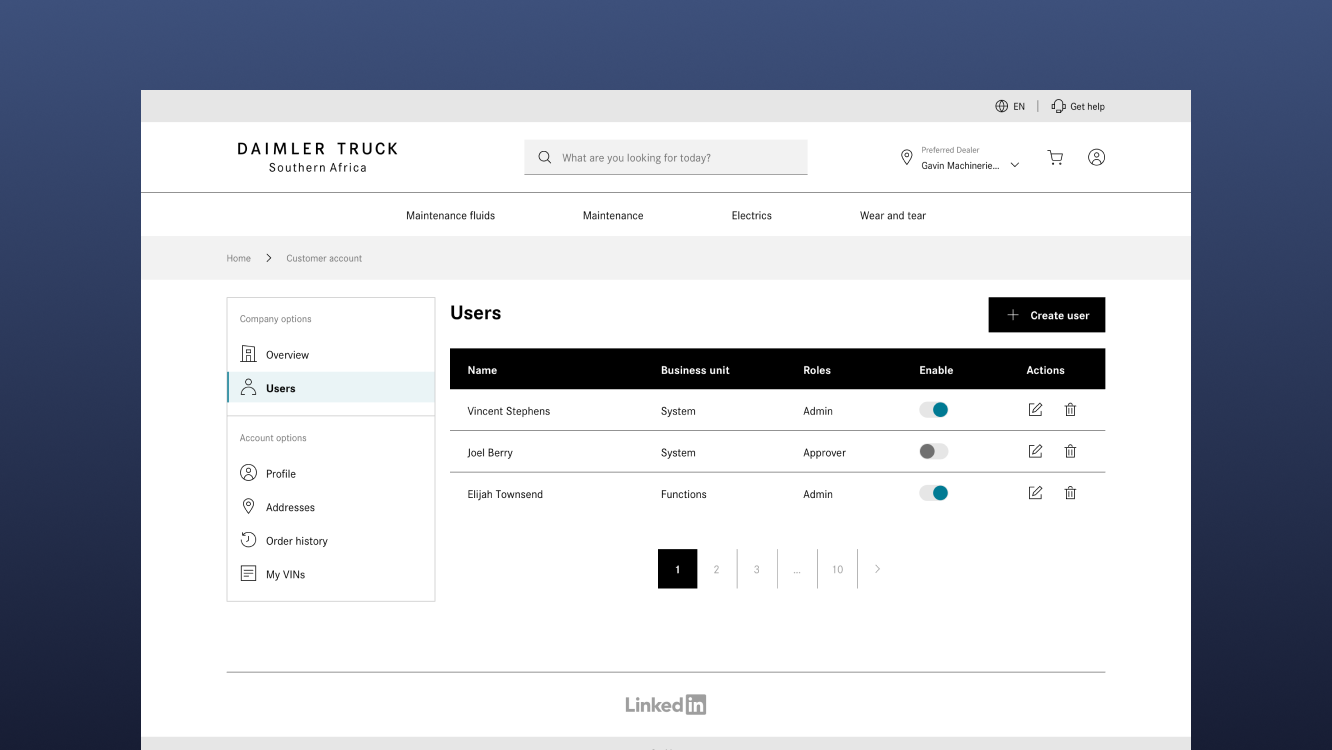
The onboarding journey was structured to handle two buyer types simultaneously: companies and fleets (with full VAT, account, and admin-user setup) and individual customers (lighter signup, preferred-dealer selection based on location). Email verification, dealer notification, and customer verification (handled by the dealer in their DMS) flowed in sequence with clear hand-offs between customer, Nagarro, dealer, and Daimler business teams.
For the South Africa launch, the journey prioritised cash customers and a single-DMS flow. For Australia, the same journey was adapted to handle non-integrated dealers and an Autoline-based inventory model, the same UX shape, different operational plumbing underneath.
Responsive design for desk and depot
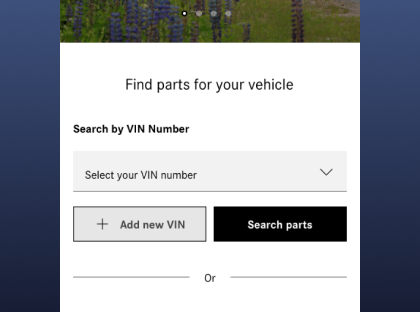
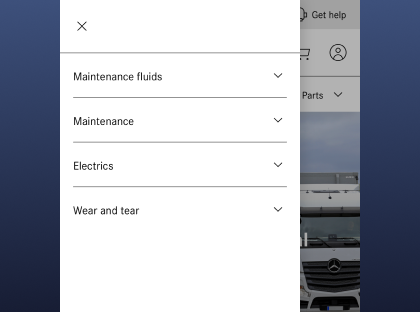
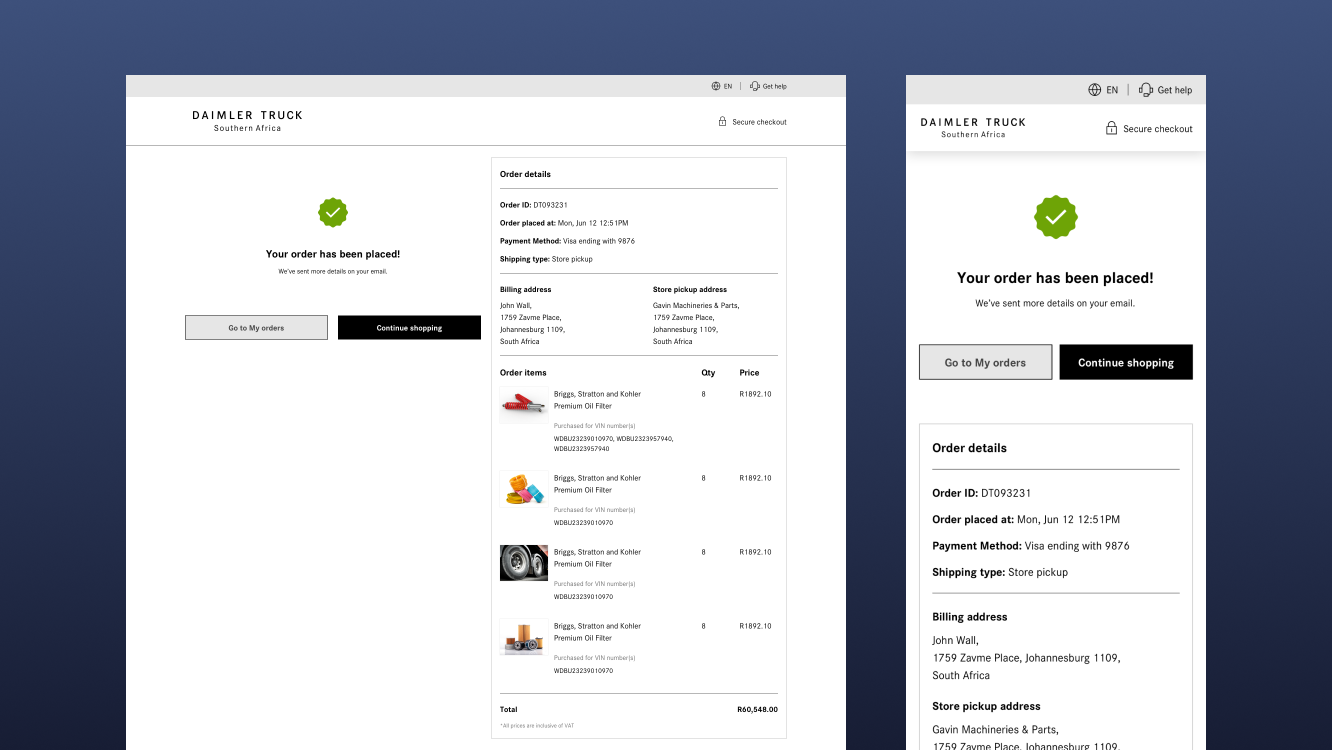
The portal had to work cleanly on desktop (where dealers typically operate) and on mobile (where fleet operators and field staff often check stock and place orders from the road). Layouts were designed responsively across breakpoints, with the catalogue, product detail, cart, and order tracking flows all tested in both contexts before handoff.
Designed to scale across regions
From day one, the design treated multi-region support as a structural requirement, not an afterthought. Currency, language, payment provider, and dealer model are all variables the system handles, rather than fixed assumptions. Adding Australia after South Africa required regional configuration, not a redesign, which is what made the second launch faster than the first.
The outcome
The Daimler Trucks Parts Portal launched in South Africa first and went live in Australia in the following phase. Both regions are now operating on the platform, with dealers selling genuine parts directly through the e-commerce channel and fleet customers using it as a primary purchasing surface.
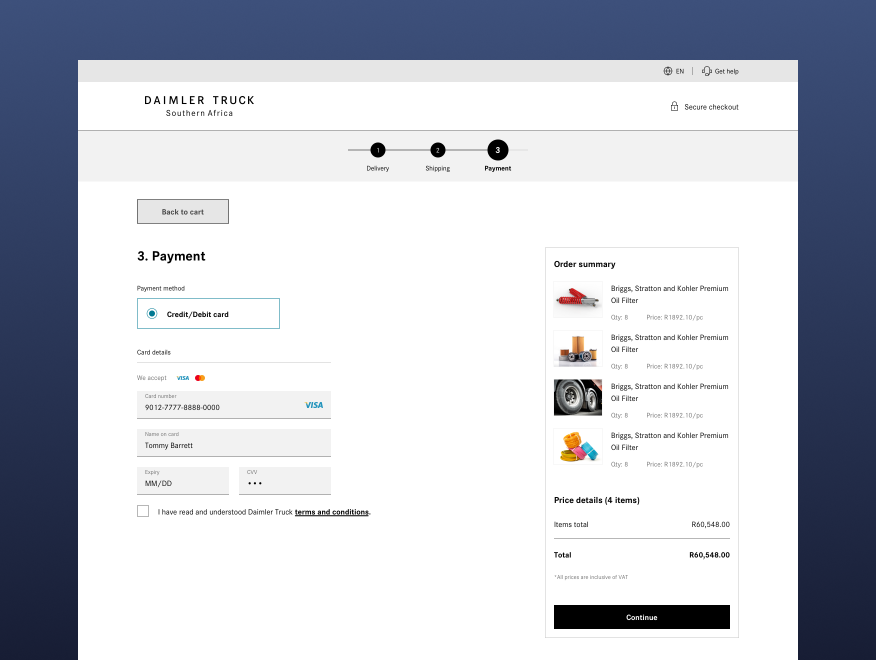
While production sales figures aren't ones I'm in a position to share, the platform met its launch objectives including dealer onboarding across regions, the 500 fast-selling parts catalogue, click-and-collect at nearest dealers, integrated card payments via DT Pay, and customer-and-dealer notification flows.
For me, the satisfying outcome was the brand-system work. Translating a global marketing-grade brand guide into a sharp, functional e-commerce system that still felt unmistakably Daimler was the hardest part of the project and the part that future regions and surfaces can now build on.
Project gallery